KYE
KYE
DESIGNS
DESIGNS

Background
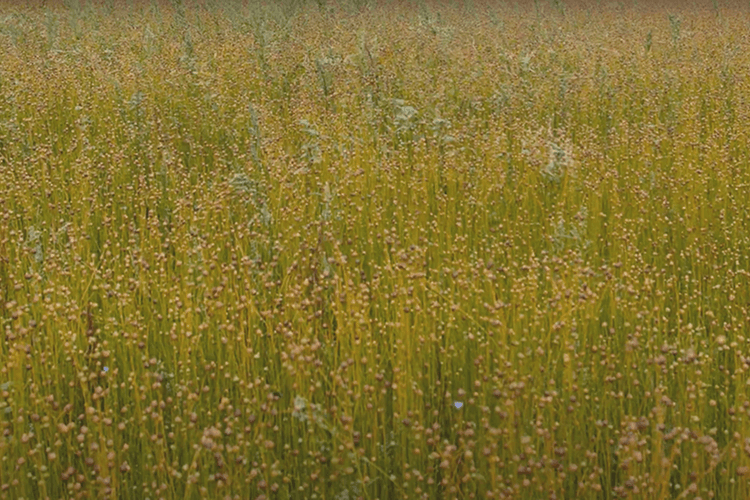
Annually, 92 million tons of textiles are discarded worldwide, projected to increase to 134 million tons by the decade's end. In the UK alone, 1.7 kg of textiles end up in landfills every year. While these synthetic fibres take 200 years to decompose, there's a humble crop that works differently and produces sustainable fibre. Flax is this linen producing humble crop that naturally biodegrades back into the soil. Historically, the UK was a significant player in flax production particularly in Scotland, where it supported a thriving linen industry, but it is now an undeveloped sector, lacking cohesive infrastructure and scale.
Despite its soil-to-soil circularity and regenerative potential, flax has largely disappeared from the UK agricultural landscape, sidelined by a system built around synthetic and fossil-fuel-derived fibres. As demand for natural and low-impact materials grows, the conditions for change are forming. Flax is uniquely positioned as a resilient crop that captures carbon, supports biodiversity, and grows well in UK soil, steeped in cultural heritage and a textile history that never fully disappeared, posing an opportunity for development and re-establishment of a more robust and integrated flax industry that promotes regeneration.
The current UK flax revival movement is fragmented: knowledge exists in isolated bioregional pockets, accessible tools for growing and processing are scarce, and machinery bottlenecks keep fibre production slow and niche. There is no shared infrastructure, no funding or structured curriculum support for fibre/agriculture systems, no clear entry point for new learners, and no connective tissue between growers, processors, educators and the broader public. The potential is there, but there is a gap between it and the people who want to engage with it.
OUTCOME
Expanding on the open source model and leveraging the momentum built by flax stewards in the flax movement, our team developed Little Flax Patch, a conceptual open source educational mobile platform co-created with seasoned, active flax stewards in the landscape that enables the untapped urban learner audience (our curious explorers), to reconnect with the fibres behind what we wear through hands-on, community-supported approach.
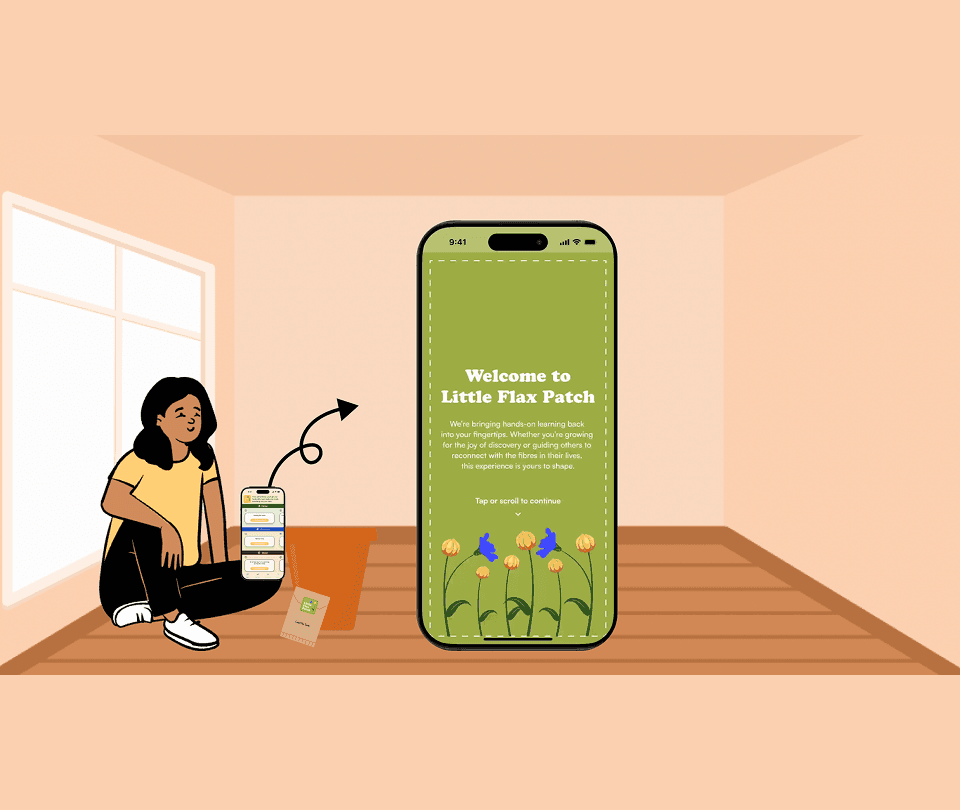
learn by doing
Why Harbour Molds Lines by Masterworks yet Sessions

Why Group Streamlining Onboarding and Saved With the Brightway

How Market.org Raisedup these RATE as 2x from Pathguide.
Our platform invites anyone to explore the full seed-to-fibre process through simple, hands-on experimentation. At its core, Little Flax Patch embraces curiosity, care, connection, and awareness, which shapes how the entire learning journey unfolds.

As users tend to their flax, individuals start developing a deeper relationship with the natural materials behind their clothes and a respect for the effort it takes to grow them. Through connection, learners engage with a wider community of growers, educators, and makers, sharing tools, knowledge, and small communal actions that ripple into larger change. Ultimately the Little Flax Patch journey enables individuals to build a tactile, grounded understanding that encourages reflection, more intentional making, and a rethinking of our everyday relationship with textiles. Over time, we hope this ripple effect grows into a larger movement for flax production.
A little about long-fibre flax:


Drag to swipe

SOLUTION:


INSIGHT INTO OUR PROCESS
Research
Our team used a mixed-methods research process that included a blend of primary, secondary, and ethnographic observations across:
Interviews from a variety of SMEs: flax fibre researchers, farmers, educators, and regenerative agriculture experts
Field work observations through volunteering at Sitopia Farm, demo farm visit to FarmEd & workshops at Flaxland and Ariadne's Thread Group
Mixed media: reports, books, films (if there's interest, please reach out for the full exhaustive list)
Analysis & Synthesis: Common themes identified
Regeneration is systemic and contextual; it runs on a spectrum with practices evolving over time and place-based, subject to the context in which biogregion farmers' are currently in
Farming is highly contextual, based on climate, soil type and local ecosystems
Regenerative farmers are motivated by stewardship, resilience, and legacy, not just profit
Flax is a regenerative opoortunity but there is a need for diversification of income to support long-term sustained efforts in both regenerative and flax farming
There is an importance of peer-to-peer networks for knowledge exchange and demo farms or alternative proof of concepts to educate farmers on best practices and ways to integrate new practices into their current system
Service design principles are already embedded in regenerative practices, with farmers adapting and iterating based on outcomes (yield) that are often uncertain, so commonly experimenting with rotations, livestock integration, and soil practices
KEY EMERging trends and developments:
There's a rising demand for flax-based products
Expansion of flax-fibre applications in textiles, construction, automotive industries, and consumer plant-based food alternatives
Advancement in regenerative agriculture powered by farmer-led initiatives like Innovative Farmers, who are promoting regnerative practices in flax cultivation
Innovation in flax waste utilisation to contribute to a more circular economy within the flax industry by reducing waste and creating additional revenue streams to position flax producers for continued growth and resilience
Ideations and iterations
Initially our project aim was to create a market for flax waste to act as a proof of concept to help farmers see the promise in sustaining the flax-growing movement as the disruption of the global supply chain has left UK flax producers with minimal infrastructure, limited market access, and no clear pathways to add value to flax waste. By identifying the right waste streams and educating the farmers about utilising flax waste to its potential and connecting them to the market, our orginal intention was to aid them in diversifying their incomes, adding a practical incentive to keep them movitivated to continually contribute to expanding the flax system in the UK.
However, with limitations in accessing farmers to truly understand the flax waste stream, we had to pivot and shift into a new direction to focus on the untapped urban learner audience to open up closed-loop fibre systems and grow demand for flax through an educational and tangible approach. We hope this enables more conscious and connected individuals and communities to engage in more sustainable living through the understanding of material connection to land and agriculture to support a more regenerative future.
A DEEPER LOOK INTO THE CURATED STEP-BY-STEP INSTRUCTIONS
What if your clothes could grow in a pot?

Grow:

Process:

Make:

A big thank you to those involved:

From garden to garment — Bridgette
Brigitte is the creative force behind Let’s Grow Flax, a movement making fibre flax accessible one square meter at a time. Through her vibrant starter kits and clear guidance, she’s helped hundreds of urban growers sow their first flax patch—proving you don’t need a field to reconnect with natural fibres.

Keeping the craft alive — Simon & Ann
Simon and Ann are master stewards of the full seed-to-fibre journey, offering hands-on experiences through Flaxland. From growing and harvesting to breaking, scutching, and spinning, they’ve taught countless learners how flax transforms into linen.


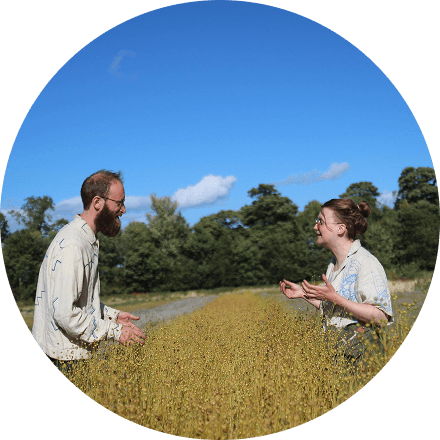
Building the machines behind the movement — Nick & Rosie
Nick and Rosie are the innovators behind Fantasy Fibre Mill, one of the UK’s only small-scale flax processing setups. By prototyping new systems for local scutching and hackling, they’re imagining a future where fibre sovereignty is possible again.

A patch of possibility — Christiane
With Berta’s Flax and the One Square Meter initiative, Christiane bridges growing, making, and storytelling. Her work not only revives ancient fibre techniques, but also reminds us that textiles carry memory. Through careful instruction and open sharing, she’s made flax feel personal again.


Paul is a dedicated steward of flax’s rich heritage, preserving traditional skills through every demonstration to ensure the craft is practiced, passed on, and valued as part of a living culture. Whether guiding primary school students or adult learners, he makes the full process fun, accessible, and grounded in experience, helping learners of all ages reconnect with craft, materials, and the land they come from. His generosity and dedication to keeping the spirit of flax alive are woven into this showcase.


Thank you for making it this far! :)