KYE
KYE
DESIGNS
DESIGNS


FEATURE CONCEPTION for

WHAT WAS DONE
UX
UI
UX Research
Product strategy
interaction design
Background
Duolingo is the world’s most downloaded education app, created to make language learning free, fun, and accessible. Its determined green owl, playful internet presence, and research-driven engagement have attracted a massive global learner community that keeps people practicing — though whether it leads to fluency is another story.
Duolingo once offered a standalone flashcard companion app called Tinycards, which launched in 2016 and was discontinued in 2020. It allowed users to practice Duolingo lessons through flashcards and create, download, and share decks. After it was retired, forum conversations and community requests continued to advocate for its return, and many learners turned to external tools to supplement their Duolingo practice.
This prompted an exploration of how flashcards could be woven directly into Duolingo’s app in a way that feels integrated, accessible, and aligned with how learners already navigate their lessons.
Outcome
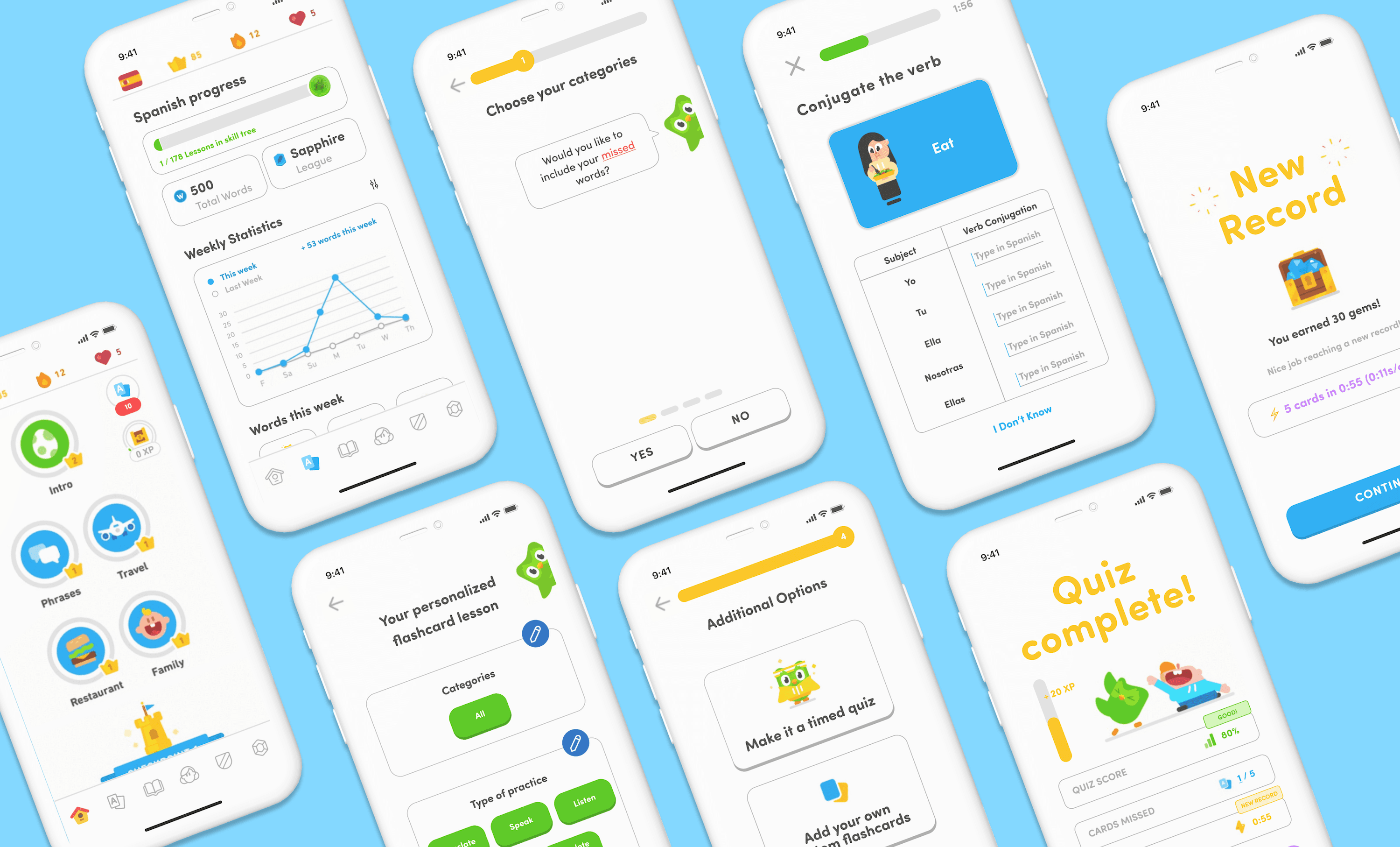
The exploration resulted in a cohesive, end-to-end flashcard feature concept that fit naturally within Duolingo’s existing learning flows, visual language, and engagement model. It demonstrated how integrated recall practice could improve retention and keep learners engaged without turning to external tools.
APPROACH AND PROCESS
Research revealed that while Duolingo keeps people motivated and engaged, many learners still struggle to retain vocabulary and review past concepts. Flashcards present an opportunity to strengthen memory, deepen learning, and keep users practicing within the app.
in looking beyond duolingo
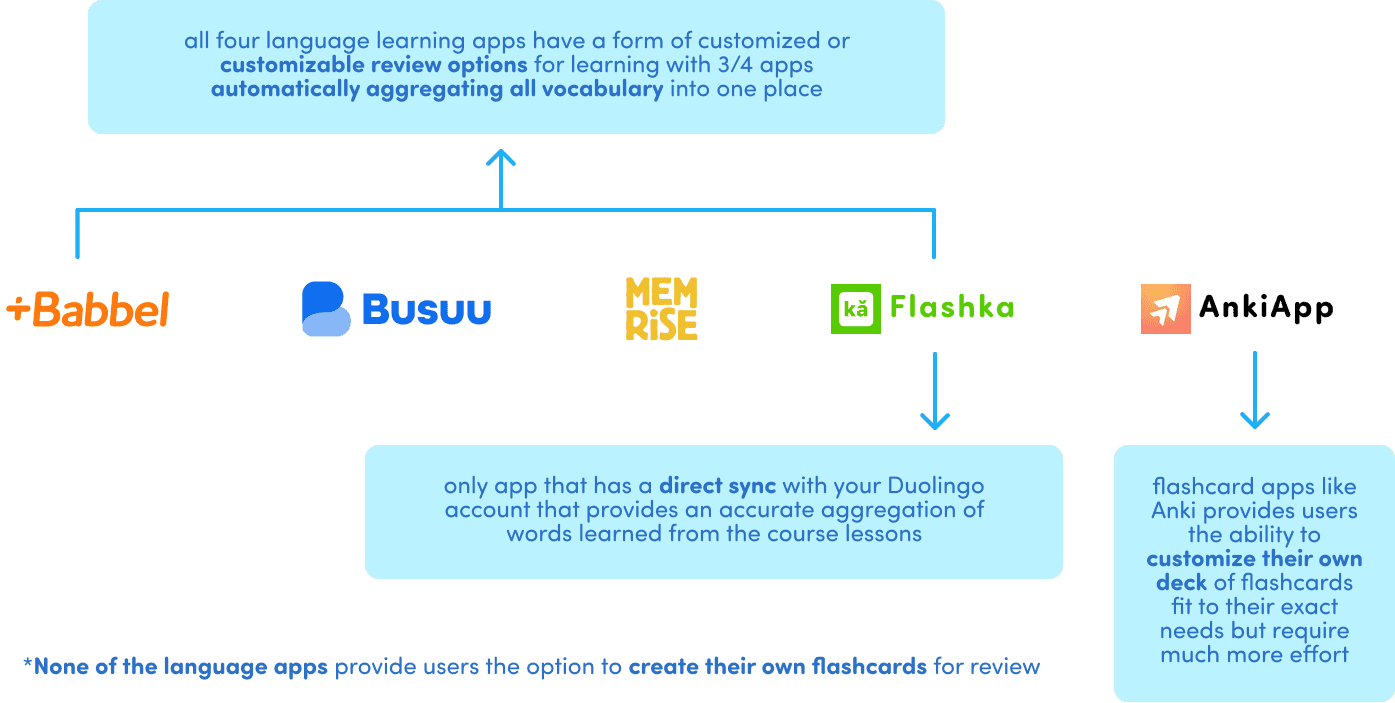
I conducted a competitive scan across language-learning and flashcard apps to understand how vocabulary review is currently supported and where opportunities for customization still remain.
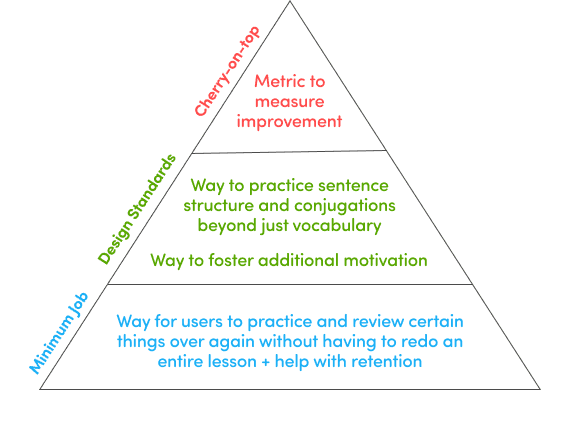
Framing A job-to-be-done USER STORY to inform the design
User Story: Meet Oliver
Oliver is planning a solo trip to Spain this fall. He has basic Spanish knowledge but wants a simple way to continually practice and retain what he’s learned, so he can confidently hold conversations and read signs when he arrives. Staying motivated is difficult, but Duolingo’s streaks and weekly leagues help keep him accountable, making it his primary learning app.
JTBD Pyramid:
Existing Design:
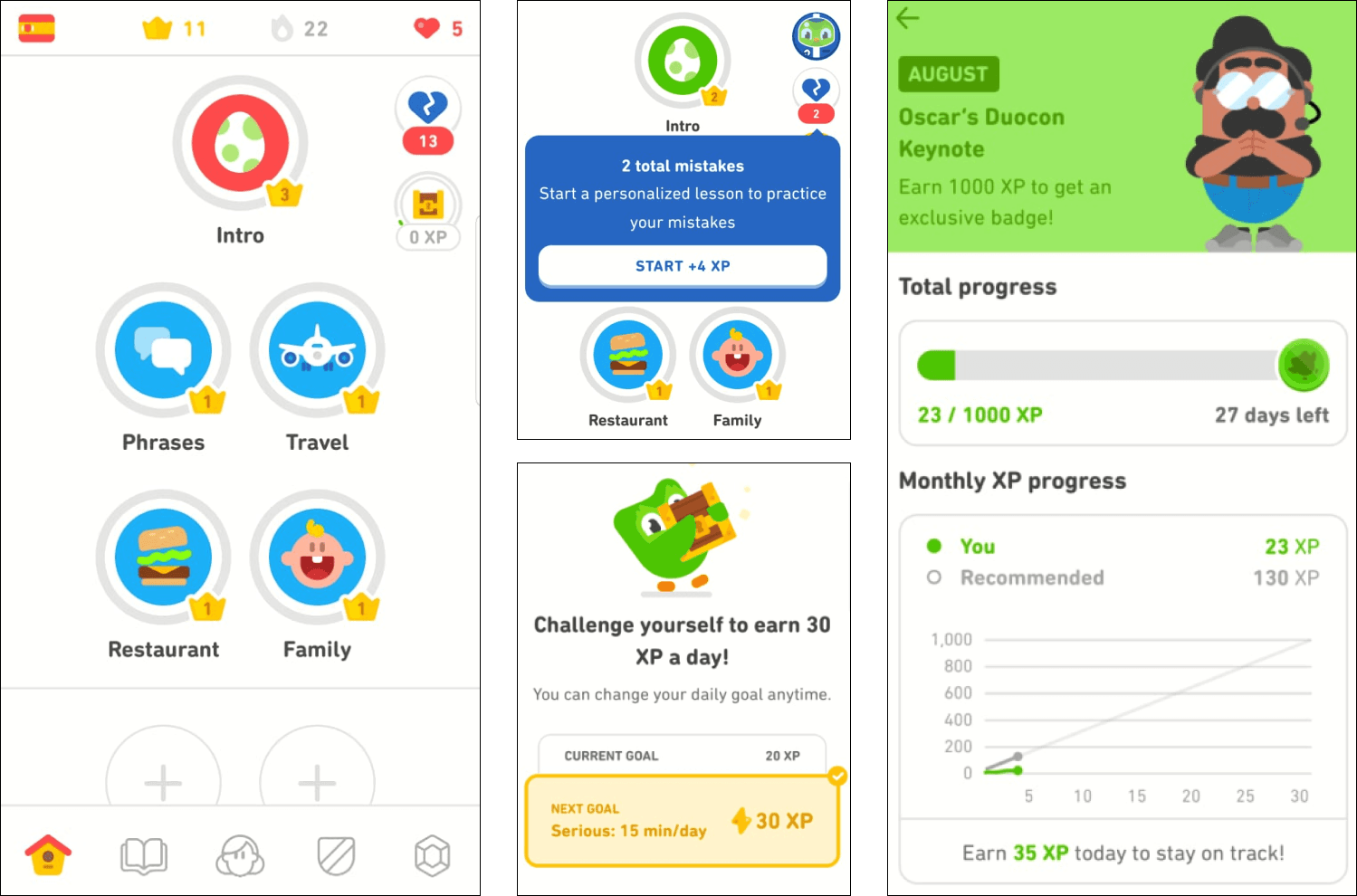
Through ideation and analyzing design patterns, four core solution attributes emerged:
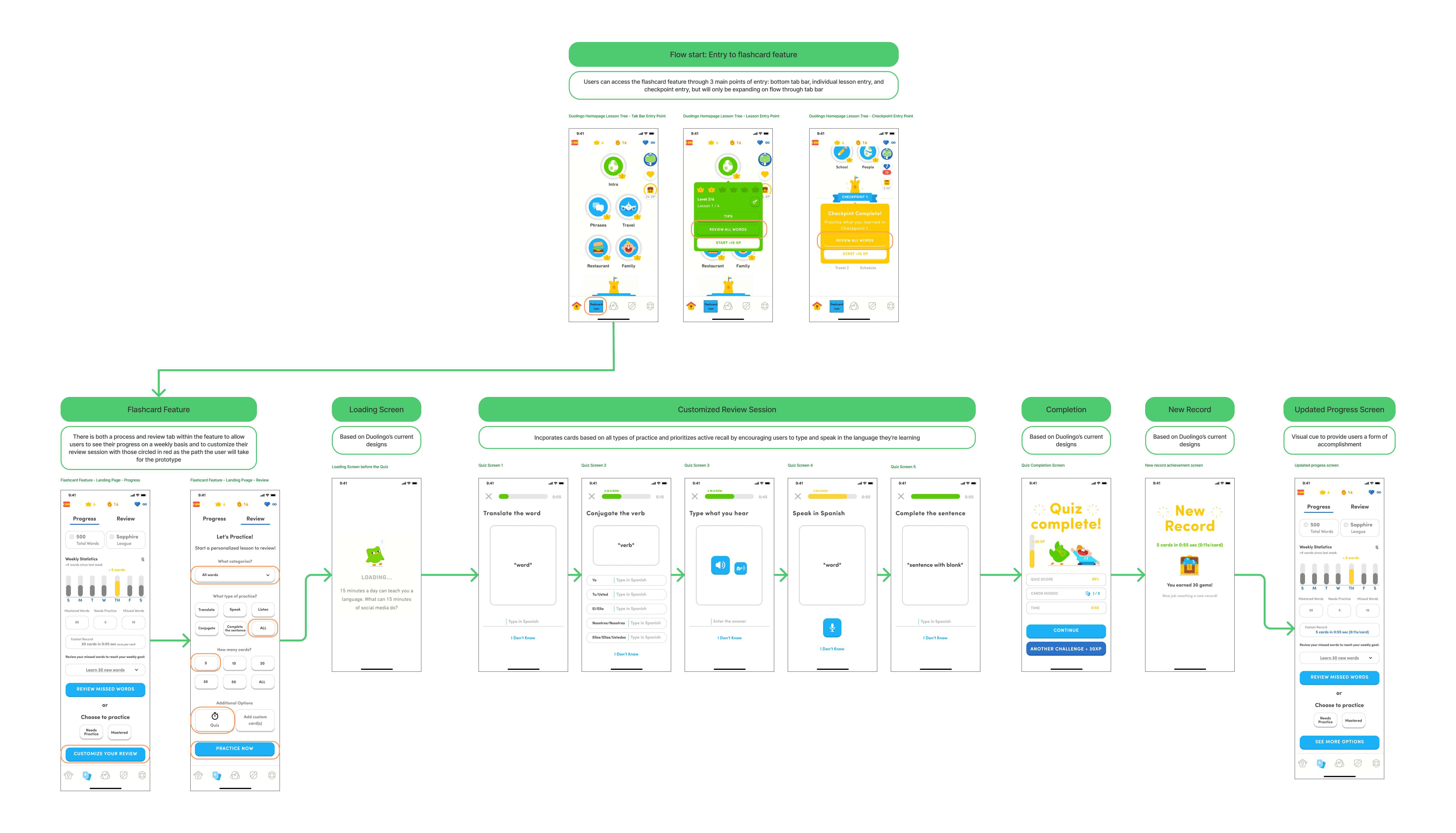
auto-saved vocabulary flashcards from lessons and weaved into Duolingo's existing lesson tree as seamless entry point(s)
extend flashcards beyond vocabulary to include conjugations, sentence structure, and optional user-generated cards
motivation through XP, gems, and timed challenges as additional ways to maintain streaks and leaderboard momentum
lightweight progress tracking, such as weekly insight into words practiced, and mastered to self-assess knowledge and confidence levels
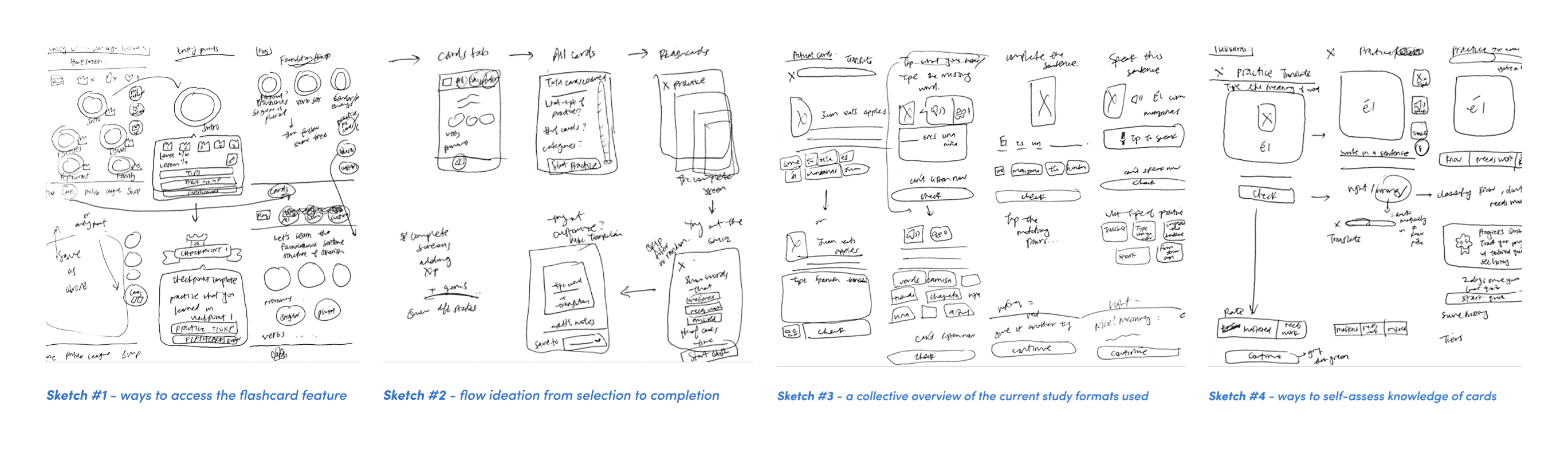
From doodles to direction

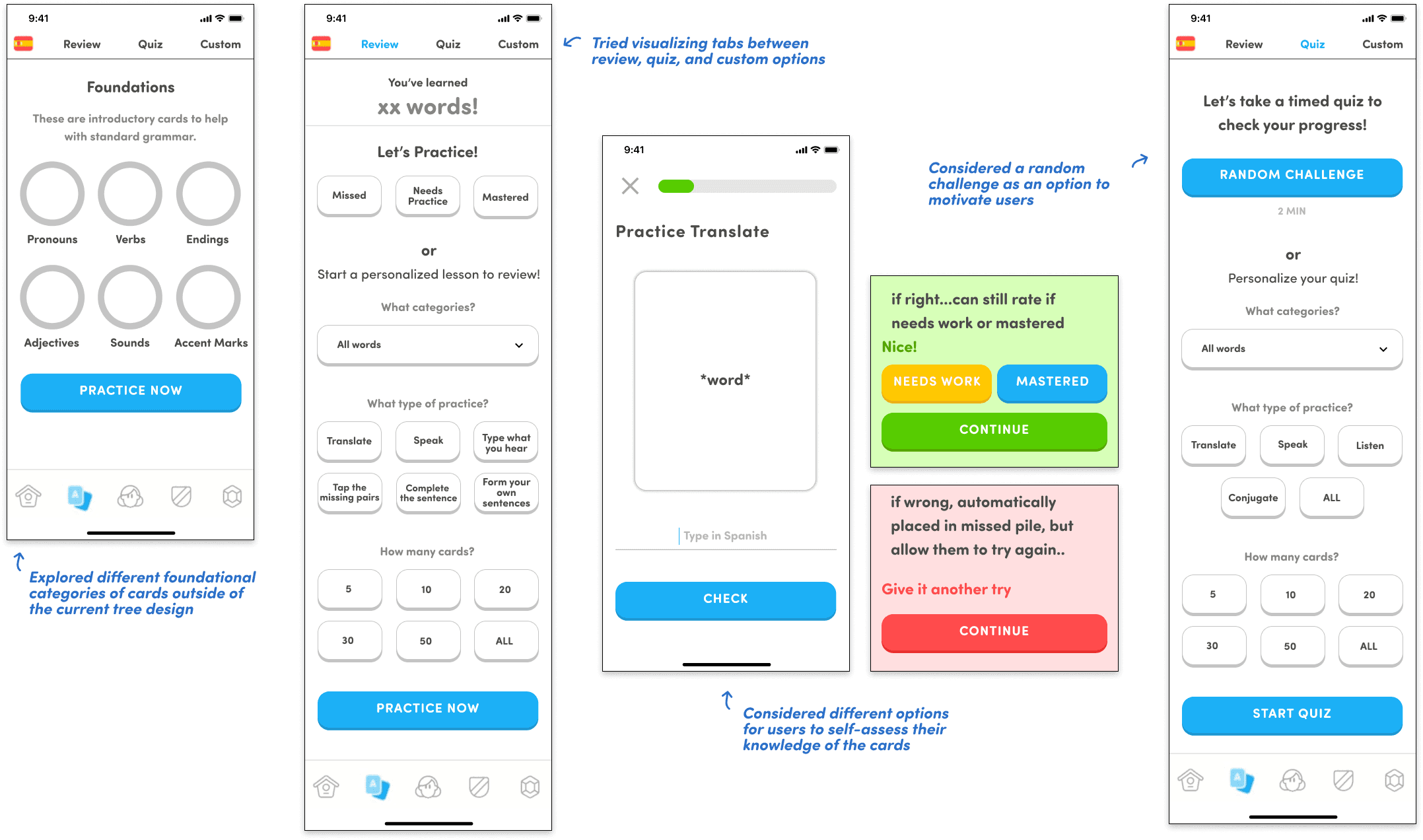

FINAL PROTOYPE
A flashcard experience that integrates seamlessly into Duolingo’s learning flow. The prototype showcases quick access points across the app, personalized lesson options based on user performance, weekly progress tracking, and advanced practice modes such as conjugation drills and timed quiz challenges. Together, these features demonstrate how flashcards can support more adaptive, motivating, and context-rich learning within the Duolingo ecosystem.
customizable lesson:
lesson in progress with tracking and challenges: